"I already have an updated resume. Can't I just upload that?"
It's one of the most common questions we hear from MBA applicants. And the short answer is: probably not.
The resume you've been using to apply for jobs and the one you'll submit with your MBA application may look similar, but they're built for two completely different audiences.
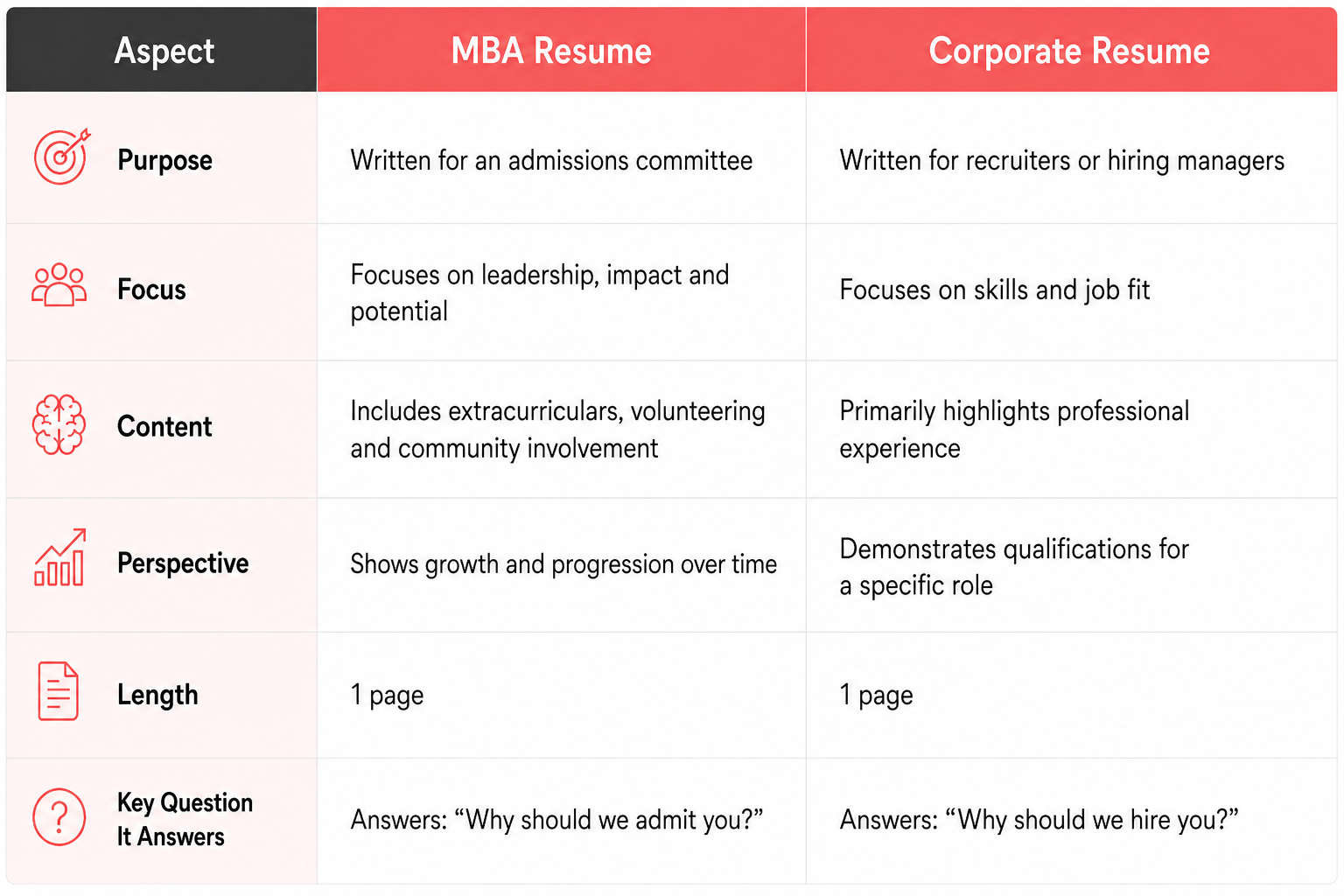
A recruiter wants to know if you can do their job.
An admissions committee wants to know if you're ready for their classroom.
That one difference changes almost everything.
It's not about what you did. It's about why it matters.
A corporate resume is often a snapshot of your professional experience. It's designed to help recruiters quickly decide whether you're a fit for a role.
An MBA resume goes a step further. It isn't just asking, "What have you done?"
It's asking, "What kind of person are you becoming?"
That's why admissions committees look for signs of leadership, initiative, growth, and impact not just a list of responsibilities.
Instead of saying: Managed a team of six analysts.
Try saying: Led a six-member team to streamline reporting, reducing turnaround time by 35% and improving client satisfaction.
See the difference? One tells us your job. The other tells us your impact.
Your job isn't your whole story
This is where many applicants lose valuable points.
If your resume only talks about your work experience, you're leaving out a big part of what makes you interesting.
Did you lead a volunteering initiative?Organize college events? Mentor juniors? Start a side hustle? Compete nationally in sports or the arts?
Those experiences may not land you a job but they absolutely help admissions committees understand what you'll bring to campus.
Remember, business schools aren't just building a batch of professionals. They're building a community.
Don't treat your resume like a checklist
Another common mistake is trying to squeeze in everything you've ever done.
Admissions officers don't need to know every task you've performed over the last five years. They want to see the experiences that best reflect your growth, your leadership, and your potential.
A focused resume almost always leaves a stronger impression than an overloaded one.
The takeaway
Think of your corporate resume as a document that answers:
"Why should we hire you?"
Your MBA resume answers a different question:
"Why should we admit you?"
The difference may seem subtle, but it changes what you choose to include, how you write about your experiences, and the story your application tells.